


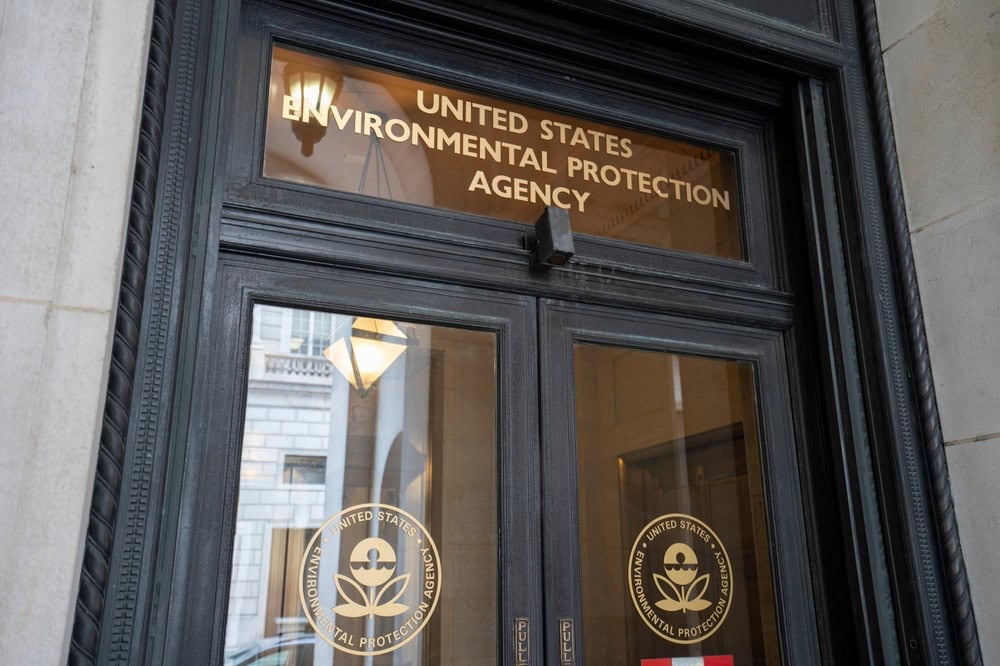
The Environmental Protection Agency (EPA) is taking another step toward restoring a more practical balance between environmental protection, economic opportunity, and the role of the states.
Last week, on Oct. 27, President Trump and EPA Administrator Lee Zeldin announced proposed revisions to federal oil and natural gas regulations under the Clean Air Act, commonly known as OOOOb/c. The proposal reconsiders several requirements finalized in 2024 and, according to EPA, could reduce regulatory costs by $45 billion while allowing an estimated 210 million additional barrels of oil and 1.41 trillion cubic feet of natural gas to be produced.
Beyond the economic implications, the proposal represents something equally important, a recognition that environmental policy works best when Washington respects the states as partners rather than treating them simply as implementers of federal mandates.
Earlier this year, EPA renewed their commitment to cooperative federalism and the importance of giving state and local officials a meaningful role in environmental policymaking. Environmental conditions, infrastructure, natural resources, and economic realities vary dramatically across the country. A policy that makes sense in one state may be impractical in another.
Methane regulation is a clear example of why that distinction matters.
Oil and natural gas wells differ considerably in size, production, geography, infrastructure, and economics. EPA itself acknowledges in the new proposal that some states already regulate wells in ways that reduce emissions while providing flexibility for producers. The agency is now seeking input from states and operators about how regulations can better reflect those real-world differences.
That is cooperative federalism at work.
The proposed rule would also reconsider requirements that placed significant federal obligations on states and producers. Among the changes, EPA proposes eliminating the federal Super Emitter Program, creating more workable categories for different types of well sites, restoring 95-percent-efficient flaring or other control devices as an option for associated natural gas, and providing additional operational flexibility for control devices and closed-vent systems.
These changes recognize that effective environmental policy need not be synonymous with greater federal control.
The choice does not have to be between environmental protection and economic prosperity. Policymakers can pursue both by establishing clear, achievable standards while allowing states, communities, and businesses the flexibility to determine how best to meet them.
EPA’s latest proposal is a welcome recognition of that balance.
As the agency moves through the rulemaking process, state officials, and producers should have a meaningful seat at the table. Washington can establish appropriate boundaries under federal law without assuming that federal regulators always know better than the people closest to the land, resources, and communities being regulated.
Environmental stewardship is strongest when government respects those closest to the issue, markets are allowed to work, and states retain the authority to lead.
That is not a retreat from environmental protection. It is a return to federalism.
EPA will accept public comments for 45 days following publication in the Federal Register. This provides states and stakeholders with an important opportunity to advocate for greater state flexibility and a final rule grounded in cooperative federalism.