


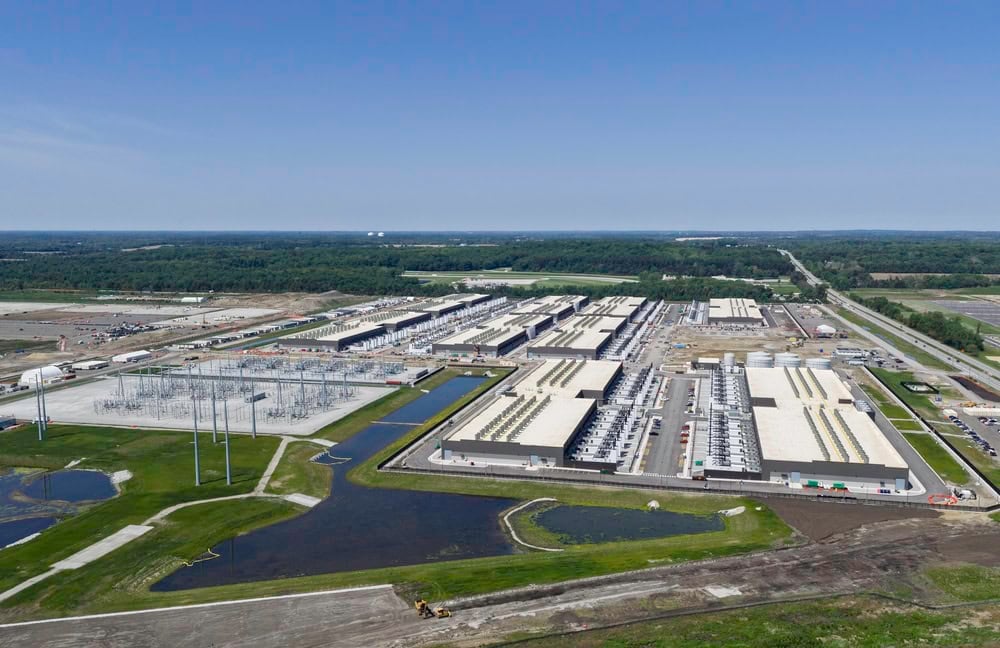
Did artificial intelligence and data centers make an outsized impact on the pivotal November 2026 general election?
While many political pundits and election watchers were focused on the marquee Congressional, gubernatorial, and state legislative contests, dozens of counties and municipalities took significant action on ballot measures targeting the data centers and critical digital infrastructure that underpin the American economy and make today’s advanced AI applications possible.
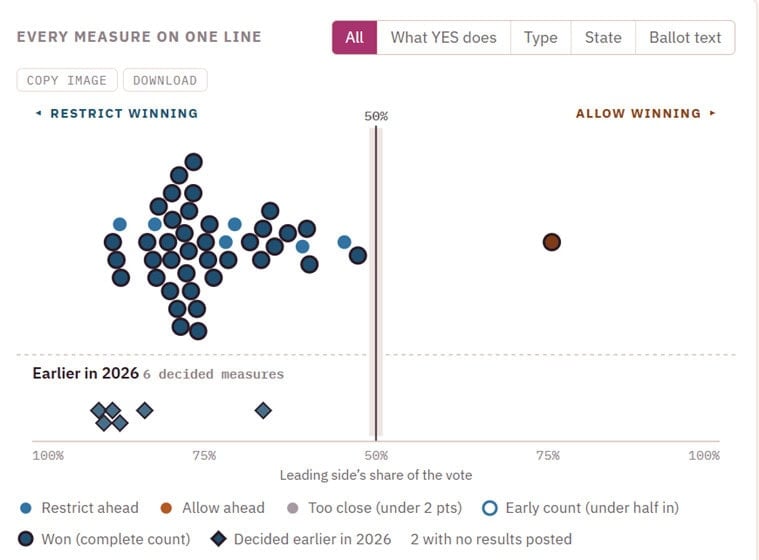
According to an analysis by Data Centers on the Ballot compiled from Ballotpedia’s measure tracking resources, voters in 13 states considered at least 40 initiatives relating to data centers in some fashion, ranging from outright bans and moratoria to tax and zoning policy changes designed to hamper or disincentivize local data center development.
The stark anti-data center sentiment was evident in the election results. The Data Centers on the Ballot analysis found that the position restricting data centers prevailed or was leading in 39 out of 40 measures, while only one measure prevailed on the “allow” side in the City of Harwood, North Dakota. On average, ballot measures restricting data centers prevailed with an overwhelming 75% of the vote.
Some states like Ohio and Maine were clear flashpoints. The Buckeye State, a growing data center market and a hub for hyperscale facilities in towns such as New Albany, emerged as the epicenter of this electoral phenomenon with 21 unique data center ballot measures across 18 localities, far more than any other state.
But these measures were not solely contained to existing tech hubs and innovation corridors in Ohio, Texas, Pennsylvania, or Virginia. The City of Alhambra in Los Angeles County, California, amended its municipal code to prohibit data centers in all zones, while the City of El Dorado, Kansas, adopted a ten-year ban on large battery storage systems and data centers exceeding 10 MW.
Instead of a direct ban, the town of North Berwick, Maine, sought to curb development by adopting a zoning amendment capping the size of a data center facility at 25,000 square feet, roughly the size of a medium-to-large commercial building. As a comparison, Meta’s New Albany campus occupies 3.8 million square feet of data center footprint.
Other measures sought to impose new energy consumption limits, water consumption thresholds, and concessions for data centers seeking tax abatements or special tax designations. No matter where data centers appeared on the ballot, the election results clearly demonstrated that communities have deep concerns and genuine questions about the tangible impact this critical infrastructure will have on the ground, and whether the community benefits will truly materialize as promised.
In the wake of this feedback, state and local policymakers should take these lessons to heart and pursue trusted solutions rooted in the ALEC model Digital Infrastructure & Ratepayer and Resource Protection Accord. Data centers should always function as a net benefit to their local communities, not acting as an extractor of energy and water that shifts its grid costs onto the local ratepayer. When communities are faced with a decision on whether data center projects are the right fit, it is important for local leaders, state policymakers, and the general public to operate with an honest and complete picture of the benefits—which are often overlooked—as well as the legitimate drawbacks.
In Ohio alone, Amazon Web Services reported over $39 billion in data center infrastructure investments supporting more than 6,000 full-time jobs and millions in tax revenue, while Meta has made meaningful commitments to address local concerns about energy efficiency, water stewardship, and job training.
As states like California, Ohio, and Texas continue to layer on restrictions and problematic provisions blocking vital infrastructure required to meet today’s AI moment, will cities like Harwood, North Dakota, become America’s next leaders in technology and innovation? The states that succeed in solving the energy and natural resource questions, while dispelling the myths and delivering the economic gains, will surely advantage their constituents for decades to come.