
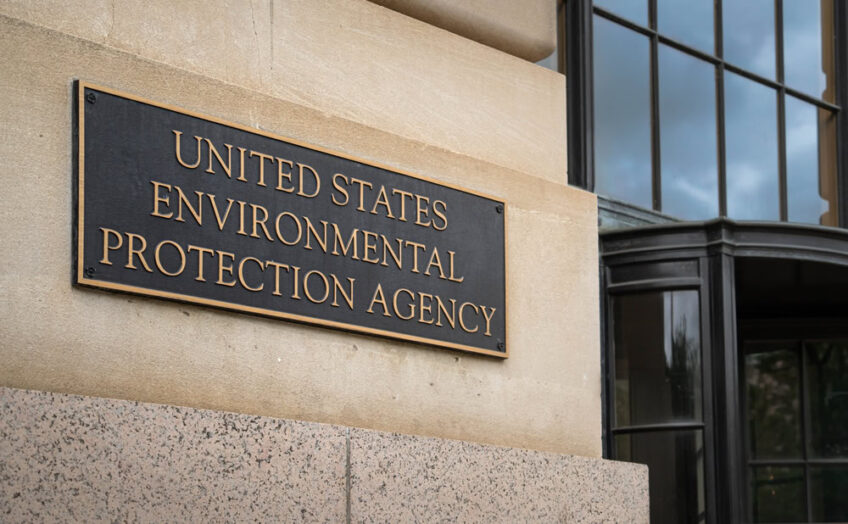
EPA Finalizes Rule to Remove Endangerment Finding and Rein in Administrative Overreach
This meaningful rule change not only curtails the overburdensome administrative state but prioritizes American industry, the American people, and our separation of powers system.
For more than fifteen years, the Environmental Protection Agency’s 2009 Endangerment and Cause or Contribute Finding served as the keystone of federal greenhouse gas regulation. This administrative finding unlocked sweeping regulatory authority over motor vehicles, laying the foundation for expansive climate-related rulemaking across multiple sectors of the economy. However, this past week, the EPA finalized its rule repealing the finding.
Issued under Section 202(a) of the Clean Air Act, the Endangerment Finding was an EPA administrative rulemaking that found (1) six greenhouse gases (CO₂, methane, nitrous oxide, HFCs, PFCs, SF₆) “endanger public health and welfare,” and (2) emissions of those gases from new motor vehicles contribute to that endangerment. Once the EPA made the Finding, it was legally required to regulate greenhouse gas emissions from new motor vehicles, leading to automotive regulations with aggregate costs of more than $1 trillion, which eventually expanded to justify the regulation of industry beyond cars and trucks.
Entire compliance markets, enforcement regimes, and administrative guidance structures grew from that original finding. It became the legal predicate for a decade and a half of regulatory growth—a prime example of the ever-expanding federal government via the administrative state.
In August 2025, the EPA, under the direction of President Donald Trump and Administrator Lee Zeldin, proposed the Reconsideration of 2009 Endangerment Finding and Greenhouse Gas Vehicle Standards to rescind the 2009 finding and the greenhouse gas emission standards that depend on it. Now finalized, the rule has effectively undercut the Endangerment Finding’s foundation.
Given the drastic impact the Endangerment Finding has had on industry and the economy over the past fifteen years, the EPA’s rule change signifies one of the largest deregulatory actions in modern U.S. history. It comes in the context of the Administration’s unprecedented deregulatory efforts, in which federal agencies have now finalized 646 deregulatory actions, realizing over $211.8 billion in net cost savings and yielding a 129-to-1 (revocation-to-issuance) ratio.
While monumental in its own right, this regulatory sweep also echoes a broader principle increasingly recognized by the Supreme Court, the Trump Administration, Congress, and dozens of state legislatures across the nation: executive agencies must operate within clear legislative authorization.
The EPA states that the original 2009 finding improperly expanded the Clean Air Act beyond its text and structure. It highlights that Section 202(a) of the Clean Air Act contained no congressional authorization for the 2009 EPA to “…prescribe emission standards in response to global climate change concerns…” or to facilitate the regulatory regime that followed them. And that is exactly correct.
Policy decisions with staggering economic and political consequences cannot rest on thin statutory hooks, or worse, none at all. Most importantly, in doing so, the virtue of democratic accountability is undermined. The EPA’s recent action rebalances these dynamics, putting regulatory actions back where they belong—under their appropriate statutory scope and removing those that have none.
The American Legislative Exchange Council applauds President Trump and Administrator Zeldin for successfully implementing such historic regulatory reform. This meaningful rule change not only curtails the overburdensome administrative state but prioritizes American industry, the American people, and our separation of powers system.