
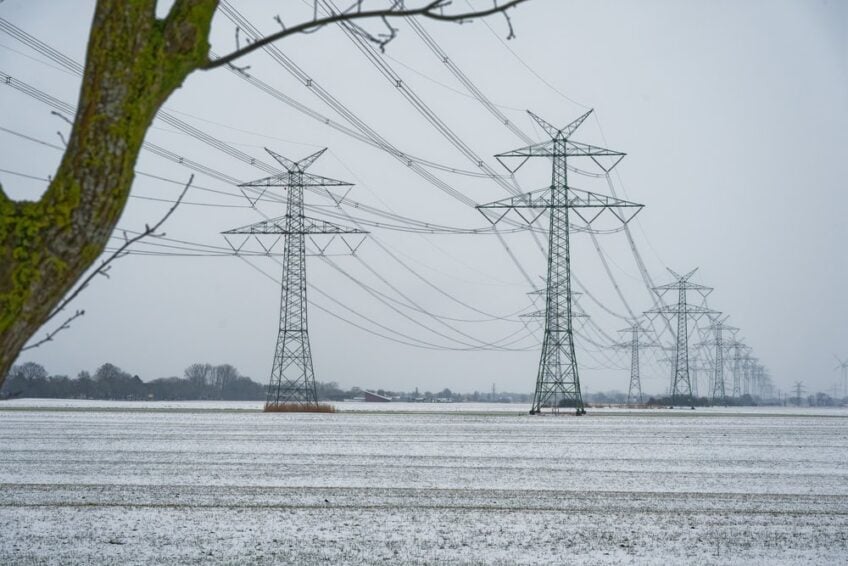
Evaluating the Power Sector’s Response to a Winter Storm Doubleheader
Though the industry was broadly successful in responding to recent winter storms, structural vulnerabilities still exist.
A pair of devastating winter storms recently battered large swaths of America, shattering snowfall and temperature records. Not only did these storms strain our nation’s electric grid and transmission infrastructure, some regions experienced higher than usual energy prices as demand for natural gas surged.
As communities conclude their efforts to restore and rebuild, it is important to take the time to evaluate the current state of America’s electric grid, understand the successes and vulnerabilities of our nation’s energy infrastructure, and adopt policies that improve resilience in times of crisis by ensuring a sufficient backbone of dispatchable, baseload energy on the grid.
By late January, at least 24 governors issued states of emergency in advance of Winter Storm Fern, a system that developed as far west as New Mexico and migrated to the entire Eastern Seaboard. This quickly amounted to one of the most significant winter storms in U.S. history, resulting in at least 172 deaths and extended power disruptions for hundreds of thousands of Americans.
Industry leaders and government officials alike praised the cooperative efforts to resolve problems quickly across state lines. Though many Americans lost power for extended periods of time throughout these storms, outages were mostly localized incidents resulting from downed transmission and distribution systems.
Broadly speaking, the electric industry demonstrated impressive resilience throughout Winter Storm Fern. Within three days, line crews had restored power to over 750,000 customers across the nation, a remarkable response to the widespread local outages that occurred.
Power plants met the increased demand for energy during the extreme cold by relying on dependable baseload power sources. Coal-fired power increased 31%, and natural gas power increased 14% relative to the previous week. During the storm, daily demand for natural gas approached an all-time high and spiked well above average.
Utilities and power providers began amassing resources and manpower well ahead of anticipated grid disruptions and power transmission failures. As the storm intensified, workers were already pre-positioned with equipment and supplies to enable around-the-clock work under adverse conditions. Industry swiftly initiated a “mutual assistance mobilization” that deployed over 65,000 line and utility repair workers from 44 states in response to evolving disaster response needs.
Just a few weeks after Fern, another massive system, Winter Storm Hernando, pummeled the Mid-Atlantic states and New England with more extreme wind and blizzard conditions. At its peak, over 650,000 customers lost power, with over 300,000 outages reported in Massachusetts alone. Furthermore, wind gusts as high as 80 MPH prevented line crews from safely operating heavy machinery.
In the case of Hernando, the industry’s response was once again generally a success. Avangrid, an energy company that oversees power suppliers in Maine, New York, and Connecticut, noted how preparedness in each subsidiary region allowed it to address over 10,000 outages in quick succession, with extra crews stationed in each region. PSEG, serving suburban New Jersey, reported over 56,000 outage repairs with a total staff of 3,000 employees mobilizing throughout the storm.
Though the electric industry was broadly successful in responding to and persevering through two historic winter storms in the past two months, many structural vulnerabilities still exist across the nation. ALEC model policies provide a pathway for states to begin correcting these pain points and ensure grid reliability during future disasters.
To address concerns regarding the dispatchability and reliability of electricity generation during severe weather events, the Affordable, Reliable, and Clean Energy Security Act requires states to prioritize electricity generation sources that are readily available, able to meet high demand, and able to scale up or down to stabilize the grid.
In the context of major winter storms such as Fern and Hernando, the ARC Act would have helped ensure states heavily reliant on intermittent generation sources have a reliable backstop of generation sources in place, such as natural gas or nuclear.
Finally, increased pipeline investment and natural gas infrastructure could improve the capacity of natural gas power plants to fulfill energy demand when renewables cannot produce. When demand for natural gas rose during Winter Storm Fern, northeastern states were unable to meet demand due to constricted pipeline infrastructure, raising the cost to transport additional natural gas and passing higher electricity bills to consumers. Historic policy decisions in opposition to new pipeline infrastructure have been blamed for this effect.
These disaster response case studies point to the value of cooperation and collaboration in delivering exceptional energy services to constituents. States and energy producers alike should prioritize these values in building back after these storms.