
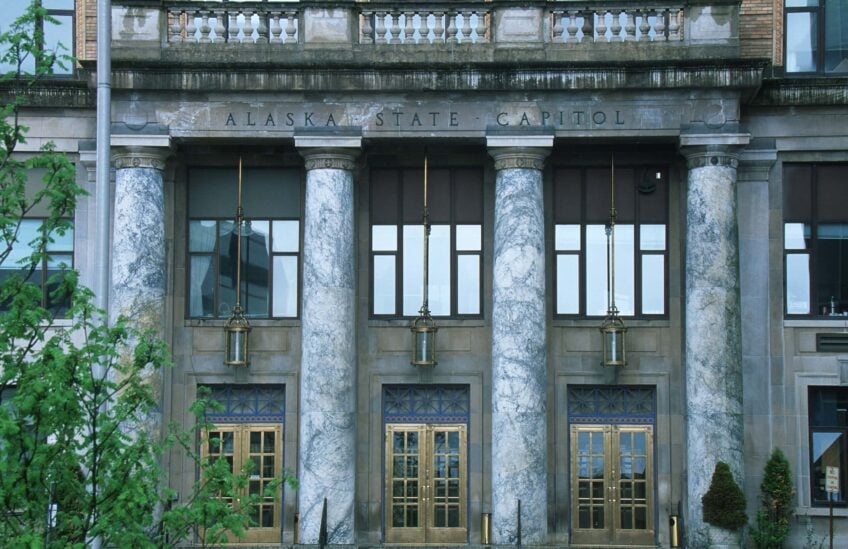
Zachary Federico Testimony in Alaska: Veterans Justice Act
ALEC Veterans and Military Affairs Task Force Director Zachary Federico testified before the Alaska House Veterans & Military Affairs Committee and the Senate State Affairs Committee regarding HB 299 and SB 236, which are similar to ALEC model policy, the Veterans Justice Act, and seek to create alternative sentencing options for certain veterans whose offenses may be linked to service-related conditions.
Read his testimonies below:
Alaska House Veterans & Military Affairs Committee
Chairman Eischeid and Members of the Committee,
My name is Zach Federico, and I serve as the Director of the Veterans and Military Affairs Task Force at the American Legislative Exchange Council. Thank you for the opportunity to share ALEC’s nonpartisan research and analysis as you consider this legislation.
ALEC is the nation’s largest nonpartisan, voluntary membership organization of state legislators dedicated to the principles of limited government, free markets, and federalism. The ALEC Veterans and Military Affairs Task Force includes more than 100 state legislators and private-sector leaders who collaborate to develop model policies that support our nation’s veterans, servicemembers, and military families.
One of these model policies is the Veterans Justice Act, which, like HB 299, creates alternative sentencing options for certain veterans whose offenses may be linked to service-related conditions. This policy has been implemented in Minnesota, signed into law in Nebraska, and introduced in West Virginia, Kansas, and Colorado. The approach upholds justice while recognizing the unique challenges many veterans face.
Research demonstrates a strong connection between combat deployments and adverse mental health outcomes, including post-traumatic stress disorder, substance use disorder, and traumatic brain injury. Today, servicemembers are deploying at higher rates than previous generations, with 77% of post-9/11 veterans having deployed compared to 58% of pre-9/11 veterans.
After military service, most servicemembers transition successfully to civilian life. However, some struggle with the invisible wounds of service and become involved in the criminal justice system. While veterans treatment courts have shown positive results, publicly available data from 2024 shows that they are only available in about 17% of counties. This leaves many veterans without access based solely on where they live.
By establishing alternative sentencing options, Alaska can provide judges with the discretion to place eligible veterans in treatment and probation when appropriate, rather than relying solely on traditional sentencing. This approach supports accountability, recognizes service, and strengthens public safety.
Respectfully submitted,
Zach Federico
Director, Veterans and Military Affairs Task Force
American Legislative Exchange CouncilAlaska Senate State Affairs Committee
Chairman Kawasaki, Vice Chairman Bjorkman, and Members of the Committee,
My name is Zach Federico, and I serve as the Director of the Veterans and Military Affairs Task Force at the American Legislative Exchange Council. Thank you for the opportunity to share ALEC’s nonpartisan research and analysis as you consider this legislation.
ALEC is the nation’s largest nonpartisan, voluntary membership organization of state legislators dedicated to the principles of limited government, free markets, and federalism. The ALEC Veterans and Military Affairs Task Force includes more than 100 state legislators and private-sector leaders who collaborate to develop model policies that support our nation’s veterans, servicemembers, and military families.
One of these model policies is the Veterans Justice Act, which, like SB 236, creates alternative sentencing options for certain veterans whose offenses may be linked to service-related conditions. This policy has been implemented in Minnesota, signed into law in Nebraska, and introduced in West Virginia, Kansas, and Colorado. The approach upholds justice while recognizing the unique challenges many veterans face.
Research demonstrates a strong connection between combat deployments and adverse mental health outcomes, including post-traumatic stress disorder, substance use disorder, and traumatic brain injury. Today, servicemembers are deploying at higher rates than previous generations, with 77% of post-9/11 veterans having deployed compared to 58% of pre-9/11 veterans.
After military service, most servicemembers transition successfully to civilian life. However, some struggle with the invisible wounds of service and become involved in the criminal justice system. While veterans treatment courts have shown positive results, publicly available data from 2024 shows that they are only available in about 17% of counties. This leaves many veterans without access based solely on where they live.
By establishing alternative sentencing options, Alaska can provide judges with the discretion to place eligible veterans in treatment and probation when appropriate, rather than relying solely on traditional sentencing. This approach supports accountability, recognizes service, and strengthens public safety.
Thank you for your time and attention. I am happy to answer any questions from members of the committee.