
New ALEC Regulatory Comment: Increase Accountability in Federal Grants to the States
The ALEC model Federal Funds Oversight Act provides the tools for states to be proper stewards of federal funds.
Office of Federal Financial Management
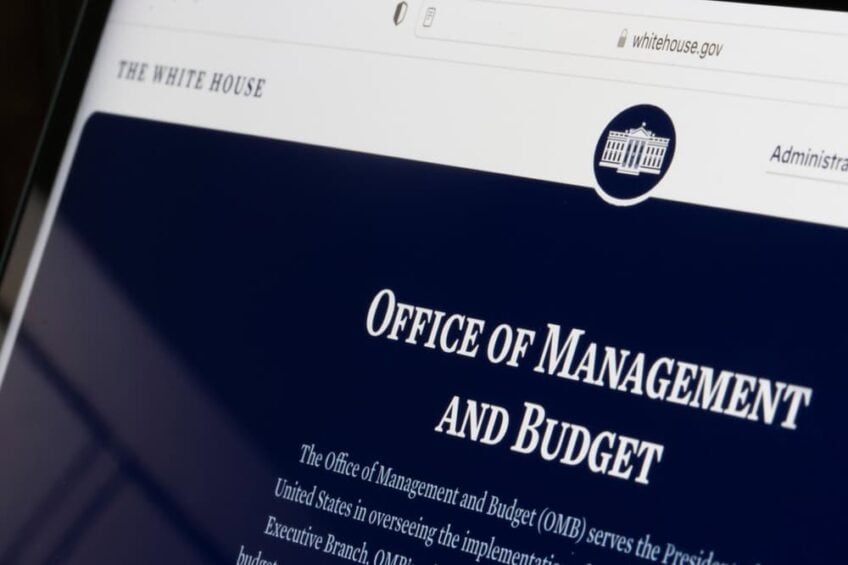
Office of Management and Budget
Submitted electronically via www.regulations.gov
Re: Docket No. OMB-2026-0034 — Regulation for Federal Financial Assistance, 91 FR 32198 (May 29, 2026); Comment on Proposed 2 CFR 200.303(f)-(g)
[200.303] The American Legislative Exchange Council (ALEC) submits the following comment on the Office of Management and Budget’s (OMB) proposed revisions to 2 CFR 200.303, which would add new internal control requirements for Federal financial assistance recipients and subrecipients.
Background
Proposed section 200.303(f) would require every recipient and subrecipient of Federal financial assistance to participate in the Department of Homeland Security’s E-Verify program to confirm the employment eligibility of employees and contractors hired in, or performing work in, the United States under a Federal award. Proposed section 200.303(g) would further require States that receive Federal financial assistance to conduct pre-payment verification checks before disbursing Federal funds, reviewing available data sources to confirm the eligibility of payees and to prevent improper payments.
Analysis
ALEC supports the principle underlying proposed section 200.303(f) and (g). Federal award funds are taxpayer dollars, and it is entirely appropriate to condition their receipt on ensuring those dollars do not finance the employment of individuals who are not authorized to work in the United States, or flow to ineligible or fraudulent payees. ALEC’s model policy, the E-Verify Requirement Act, requires employers to verify employment eligibility for new hires through E-Verify and empowers state attorneys general to enforce compliance with that requirement. The states have embraced the certainty that comes with implementing E-Verify standards, with Florida enacting the requirement in 2023. Sometimes governors issue E-Verify executive orders, as happened in Iowa after the embarrassment of hiring a high-level public official who was ineligible to work in the United States. However, more often state lawmakers take the lead, passing legislation with E-Verify requirements – states including Ohio, Tennessee, Missouri, Texas, and Rhode Island have enacted laws that require employers to affirm whether an applicant is permitted to work in this country. Extending a comparable verification standard to Federal grant and cooperative agreement recipients is a natural and complementary extension of that framework and a step that Indiana has already taken with respect to its own public contracts.
Further, the ALEC model Federal Funds Oversight Act provides the tools for states to be proper stewards of federal funds. Section 200.303 (g) requires states to conduct pre-payment checks and notes that these may be fulfilled through the Do Not Pay (DNP) system; so too does that ALEC model policy require use of DNP. The model also requires state agencies accepting federal funds to report on the internal controls used to eliminate improper payments and fraud; to alert state officials, the United States Attorney and Attorney General, and the relevant United States Inspector General of alleged or potential improper payments; and to report after final disbursement on the total improper payments. Under the model, governors and state agencies are instructed not to accept federal funds if the requirements of doing so would hinder the internal controls used to prevent fraud and improper payments. The model Federal Funds Oversight Act is available to state leaders to assist with their compliance with the proposed section 200.303 (g), ensuring they are working to prevent Federal funds from being improperly disbursed. Legislation similar to the model Federal Funds Oversight Act was introduced in Oklahoma just this year.
As the Office of Management and Budget has documented elsewhere in this rulemaking, the Federal grantmaking system has for years lacked adequate tools to verify who receives taxpayer dollars and to prevent payments from reaching ineligible recipients. Recent oversight findings, including a Department of Homeland Security Office of Inspector General report on the potential misuse of disaster-assistance funds and well-publicized fraud schemes uncovered in state-administered nutrition assistance programs, illustrate how the absence of consistent verification requirements has left Federal award programs vulnerable to exploitation. Requiring E-Verify participation and pre-payment eligibility checks will close an important gap, giving Federal agencies and pass-through entities a concrete, auditable tool to confirm that award funds are supporting eligible workers and eligible payees before money goes out the door.
This reform will increase integrity and accountability in the Federal grant-awarding process by helping ensure that American taxpayer dollars are not being sent to unauthorized workers or ineligible entities. It is consistent with the rule’s broader stated objectives of improving transparency, accountability, and oversight of Federal financial assistance.
Recommendation
ALEC recommends that OMB finalize proposed sections 200.303(f) and (g) as drafted.
Respectfully submitted,
American Legislative Exchange Council