
The Founders’ Inspiration for a Nation: Our Lives, Fortunes, and Sacred Honor
"We have taken the Founders’ closing words as more than a toast and allowed their pledge of lives, fortunes, and sacred honor to shape the people we still hope to be."
By the time the Declaration reaches its closing paragraphs, the colonists have documented a long train of abuse and usurpations. They have shown how laws were blocked, assemblies dissolved, courts bent, trade cut off, and taxes imposed without consent. But, before we conclude our series on the Founders’ inspiration, we must look at the words that follow their reasons for independence.
Before these men declare independence, they pause to remind the reader—and themselves—that they did not rush there.
“In every stage of these Oppressions,” they write, “we have Petitioned for Redress in the most humble Terms: Our repeated Petitions have been answered only by repeated Injury.”
That sentence does two things at once. It establishes that the Founders exhausted peaceful remedies and signals a profound shift in responsibility. If “repeated Petitions” are met with “repeated Injury,” then the fault can no longer be described as an error or misunderstanding.
Only then do they declare:
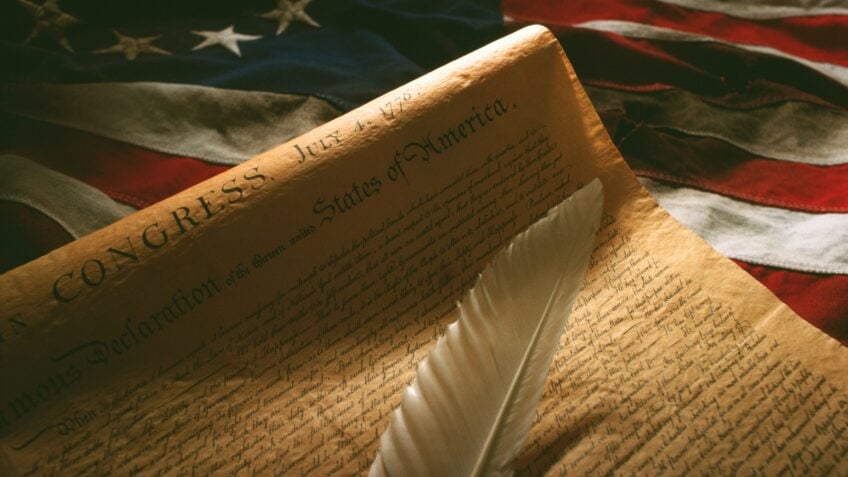
“We, therefore, the Representatives of the UNITED STATES OF AMERICA, in General Congress, Assembled, appealing to the Supreme Judge of the World for the Rectitude of our Intentions, do, in the Name, and by Authority of the good People of these Colonies, solemnly Publish and Declare, That these United Colonies are, and of Right ought to be, Free and Independent States; that they are absolved from all Allegiance to the British Crown, and that all political Connection between them and the State of Great-Britain, is and ought to be totally dissolved; and that as Free and Independent States, they have full Power to levy War, conclude Peace, contract Alliances, establish Commerce, and to do all other Acts and Things which Independent States may of right do. And for the support of this Declaration, with a firm Reliance on the Protection of divine Providence, we mutually pledge to each other our Lives, our Fortunes, and our sacred Honor.”
The pledge is not a flourish. It is the final piece of the argument. If they mean what they have said, these men must also be willing to bear the costs of acting on that conviction.
“Lives” comes first because they knew what treason meant.
To sign the Declaration was to risk being hanged under laws already enforced by standing armies, “mock Trials,” and transport “beyond Seas” for “pretended offenses.” Pledging their lives meant acknowledging that the struggle for self‑government might claim them personally. It is one thing to say a prince has become a tyrant. It is another to accept that, in saying so, you may lose your own life under his rule.
“Fortunes” follows because they had seen what imperial policy could do to property.
Ports closed, trade “with all parts of the world” cut off, taxes “imposed… without our consent,” officers sent “to harass our people, and eat out their Substance.” To pledge their fortunes was to accept that ships, homes, and businesses might be ruined; that the livelihoods on which their families depended could be destroyed in the conflict they now believed justice required. They held that government exists to secure property, yet they knew that defending that principle might mean losing their own.
Finally, their “sacred Honor.”
They placed their commitment to one another and to their cause in a different category from ordinary promises. Having appealed to “the Supreme Judge of the World for the Rectitude of our Intentions,” they now bind their names to that appeal, trusting that history and providence will judge whether they were faithful. In a document that catalogs charters and processes bent to convenience, this final sentence is a deliberate act of covenant.
On the 250th anniversary of this pledge, we as the American people pause. The Semiquincentennial is a chance to give thanks for that rare combination of thought and courage our Founders displayed; for a document that ends not in self‑congratulation, but in a mutual vow of sacrifice, and for authors who bound their own names to the hope that a free people could govern themselves by consent and by written commitments.
As we move into the next 250 years, we must reflect on how we intend to carry our nation forward. If this anniversary is to be more than a fireworks show, it will be because we have taken the Founders’ closing words as more than a toast and allowed their pledge of lives, fortunes, and sacred honor to shape the people we still hope to be.