
Introduction
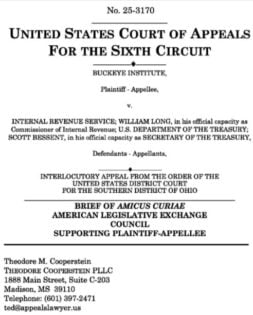
The American Legislative Exchange Council (ALEC) filed an amicus brief in The Buckeye Institute v. Internal Revenue Service, a Sixth Circuit case challenging the IRS’s effort to compel sensitive donor-related reporting from a nonprofit organization. The case raises significant concerns about the IRS’s authority to collect contributor information, the limits of executive-branch power, and the right to free association protected by the First Amendment.
The dispute began after the Buckeye Institute argued that the IRS’s mandatory donor-disclosure requirements are unconstitutional and have chilled support for the organization. Buckeye’s donors—concerned about retaliation or public exposure following a politically motivated audit—reduced or ceased giving, or chose to donate anonymously and relinquish tax-deductible receipts. These real-world consequences illustrate how federal disclosure mandates can deter individuals from supporting causes they believe in.
The ALEC brief emphasizes that the case is not simply about tax administration, but about safeguarding constitutional freedoms. Drawing on ALEC’s own experiences with harassment and exposure tied to donor disclosure, the brief warns that allowing the federal government to maintain a centralized database of donor identities invites abuse and undermines the First Amendment’s protection of private association. ALEC urges the Sixth Circuit to recognize that broad, indiscriminate collection of donor information cannot survive the exacting scrutiny the Constitution requires.