
The Founders’ Inspiration for a Nation: The Erosion of Justice and Self-Governance
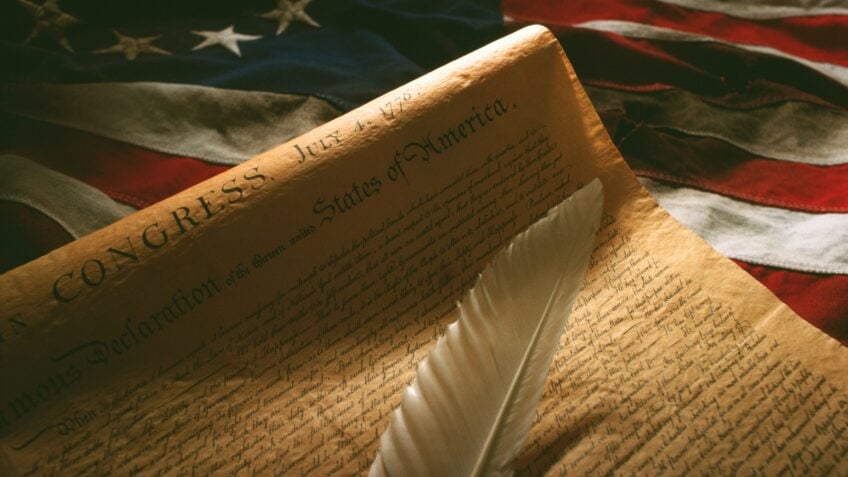
The grievances outlined in the Declaration of Independence were not abstract complaints but direct responses to a pattern of imperial policies.
The grievances outlined in the Declaration of Independence were not abstract complaints but direct responses to a pattern of imperial policies that, in the eyes of the colonists, systematically dismantled their political autonomy and legal protections. Grievances eight through eleven reveal how deeply the colonists feared the erosion of justice, self‑government, and personal security under British rule. Through judicial manipulation, expanded executive power, intrusive taxation, and the deployment of standing armies in peacetime, the Crown appeared to be constructing a system in which colonial rights existed only at the pleasure of the King. Examining these grievances together shows how the colonists came to believe that the British government was no longer merely mismanaging the empire—it was actively undermining the foundations of English liberty in America.
Grievance 8 reads, “He has obstructed the Administration of Justice by refusing his Assent to Laws for establishing Judiciary Powers.”
By withholding assent to laws concerning the structure and independence of colonial courts, imperial authorities curtailed the assemblies’ ability to shape and oversee their own judicial institutions. The Massachusetts Government Act of 1774, part of the Intolerable Acts, intensified these concerns by fundamentally reshaping the Massachusetts Council. Previously, the Massachusetts Assembly elected the Governor’s Council, which served as an advisory body to the governor. The Act stripped the Assembly of this authority and vested the power of appointment solely in the King. The newly appointed members, known as “mandamus councilors,” served at the King’s pleasure, ensuring that key positions within the colonial government, including judicial offices, remained firmly aligned with the Crown.
Jury selection was likewise altered. Rather than being chosen by town meetings, jurors were instead selected by sheriffs appointed by the royal governor. This shift removed local communities from direct participation in the administration of justice and consolidated authority in officials answerable to the Crown. Coupled with the Administration of Justice Act, which permitted royal officials accused of certain crimes to be tried outside Massachusetts, colonists increasingly feared that their traditional protections, including the right to trial by a local jury, were being systematically eroded.
Grievance 9 reads, “He has made Judges dependent on his Will alone for the tenure of their offices, and the amount and payment of their salaries.”
Beginning with revenue measures such as the Townshend Acts, Parliament created the financial mechanism that allowed the Crown to pay colonial judges directly rather than leaving their salaries under the control of elected assemblies. When the Crown announced in 1772 that it would begin funding the Massachusetts Superior Court judges from these revenues, colonists immediately recognized the constitutional danger: a judge whose salary and tenure depended on the King could not be expected to remain impartial in disputes involving royal authority. This shift removed a crucial check on executive power and threatened the independence of the courts.
By placing judges, and, increasingly, royal governors, on the Crown’s payroll, the imperial government ensured that key officials no longer relied on the colonists for their offices or income. Colonial assemblies protested, arguing that a judiciary financially beholden to the King could not be trusted to safeguard local rights or administer justice fairly. Outrage over this erosion of judicial independence helped in the creation of the Committees of Correspondence in Massachusetts. To many colonists, the move signaled that lawful self‑government was being replaced by a system of salaried obedience. A judge paid by the Crown was no longer a neutral arbiter but an instrument of imperial control.
Grievance 10 reads, “He has erected a multitude of new Offices and sent hither swarms of Officers to harass our people, and eat out their Substance.”
Every American student learns about the Boston Tea Party in grade school. But this event was the culmination of years of oppressive taxation from the royal government. Some of the most hated taxes were imposed in the Stamp Act in 1765. The Act taxed almost all printed materials in the colonies—and in a time before iPhones and email, it amounted to a tax on much of the Colonies’ commerce. Taxes were paid on newspapers, contracts, almanacs, liquor licenses, mortgages, marriage licenses, diplomas, even playing cards.
As, a result of boycotts and enforcement challenges, the Stamp Act was repealed in 1766, but just a year later, Parliament enacted the Townshend Acts. Perhaps the most important colonial taxes leading up to the revolution.
Grievance 11 reads, “He has kept among us, in times of peace, Standing Armies without the Consent of our legislatures.”
After Britain and France concluded the Seven Years’ War with the Treaty of Paris in 1763, imperial officials insisted that a permanent army in the American colonies was necessary both to deter any renewed French ambitions in North America and to contain violent conflicts between colonists and Native nations along the frontier. While many colonists initially accepted the protective value of British forces, by the late 1760s and early 1770s they had come to view the army less as a defensive necessity and more as an instrument for enforcing Parliament’s revenue measures.
The deployment of British troops into settled towns, most notably Boston in 1768, raised colonial suspicions that the army’s primary purpose was to enforce parliamentary taxation rather than to defend the colonies from external threats. Tensions culminated in 1770 when British troops fired into a crowd, killing five civilians in an incident that became known as the Boston Massacre. A few years later, the Quartering Act of 1774, enacted as part of the Coercive Acts, expanded the authority of royal governors to secure housing for troops within the colonies when adequate barracks were unavailable. What British officials regarded as a lawful exercise of imperial authority, many colonists viewed as a direct encroachment on their self-governance.