
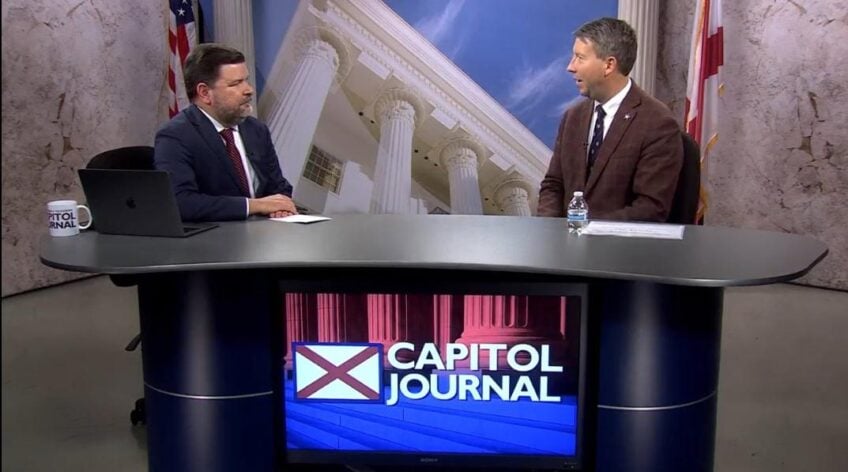
Why Some States Win and What Drives Economic Competitiveness: Jonathan Williams on Alabama Capitol Journal
"If it's a good idea and it's worked in other states, it's worth a shot to make your state more competitive."
ALEC President and Chief Economist Jonathan Williams was featured on Capitol Journal as part of Alabama Public Television, discussing the organization’s 50-year history, its nonpartisan mission focused on free markets, limited government, and federalism, and highlighting the “Rich States, Poor States” report, which ranks states on economic competitiveness, with Alabama currently ranked 20th.
The conversation started with a general overview of ALEC as an organization and its policy solutions that can help strengthen state economic outlooks. Williams mentioned its 50-year history and its nonpartisan, nonprofit status in all 50 states.
“We have about 2,000 state legislative members of ALEC who really believe in our three guiding principles, and that is, free markets, limited government and federalism,” he noted.
Williams also explained the role ALEC plays in educating about policy research, analysis, and model policies that state legislators can adopt to enhance competitiveness and protect taxpayers.
“If it’s a good idea and it’s worked in other states, it’s worth a shot to make your state more competitive, protects taxpayers, enhances parental empowerment, all those great conservative principles.”
The discussion then turned to the latest economic outlook rankings in “Rich States, Poor States” and Alabama’s placement in all of it. Williams explained the report’s purpose, created by Arthur Laffer, Ronald Reagan’s economic advisor, and Steve Moore, to measure state competitiveness based on free market economic policies, taxes, and labor policies.
“Every year, right around Tax Day, we publish the new rankings and so we’re in our 19th edition this year,” he remarked. “One of the great things to look for every single year is not just the one through 50 economic outlook score, where Alabama comes in at 20th best right now for economic outlook, and that’s been an improvement over previous years, which has been good to see.”
The conversation concluded by highlighting the legacy of ALEC with its number of alumni in federal offices and its continued support for free market principles. Williams highlighted the collaboration between state and federal legislators to combine best practices and create effective legislation.
“A lot of times people think of ALEC as just in the state capitols, but our reach now has over 110 members of the current Congress who are ALEC alumni members from when they served at the state level and now serve as members of Congress,” Williams emphasized. “ALEC state legislators can combine best practices with our federal counterparts and come up with some of those great ideas that made it into that legislation.”